Working Hours
MONDAY
8.00 – 19.30
TUESDAY
8.00 – 19.30
WEDNESDAY
8.00 – 19.30
THURSDAY
8.00 – 19.30
FRIDAY
8.00 – 19.30
SATURDAY
Closed
SUNDAY
Closed
Doctors
- Pediatric
- Dermatology
- Ophthalmology
- Gynecologic
- Otolaryngology
Hospital
- Camden, 200 Banning
- Acres, 200 E Wyoming
- Woods Manor, 199 South St
- Anneville, 189 S Fairfield Dr
- Kent Acres, 60 Wolf Creek Blvd
Emergency
- Camden: (405) 555-0128
- Highlan Acres: (671) 555-0110
- Woods Manor: (307) 555-0133
- Anneville: (219) 555-0114
- Kent Acres: (219) 555-0114
We Have Our Patient Research Laboratory
Medicines on Sale
Our Main Advantages
What Is New At Medicus
How to Deal with People with Special Needs
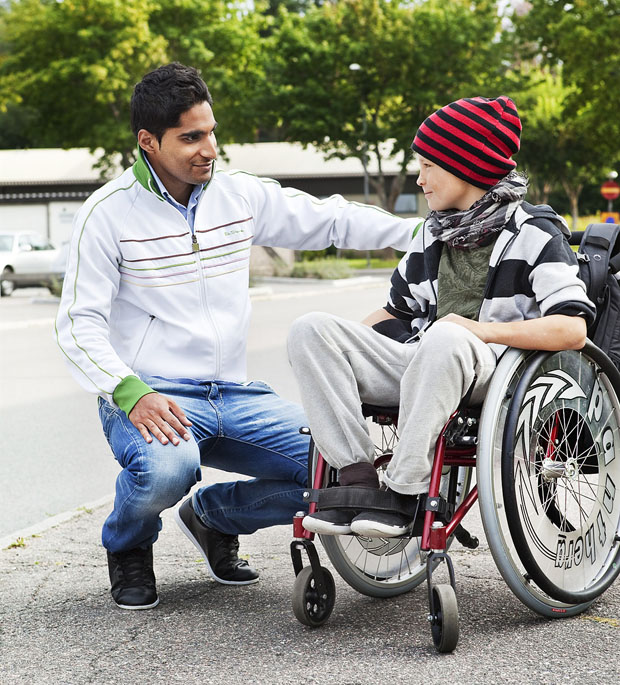
It is common to feel confused while dealing with people with disabilities, whether mental, physical, or sensory. However, it is preferable to treat them in a manner similar to how we treat normal people without discrimination or difference. To avoid unintentionally hurting them, it is best to consider the following matters when dealing with them:
When speaking with people with special needs, you should:
-
Speak in a respectful manner and with the same amount of respect we hold for others.
-
Speak with them directly without resorting to intermediaries as if we were unable to communicate with them.
-
Be patient in speaking with them and show acceptance.
-
Do not ask about the cause of the disability.
To deal with people with special needs in an appropriate way, make sure to:
-
Put yourself in the position of people with special needs so we can better understand what they feel.
-
Offer assistance to them in a sincere and respectful manner.
-
Avoid joking about their disability.
-
Take into consideration that people with special needs have the ability to develop their capabilities and depend on themselves, so do not belittle them.
The Importance of Sports for Children
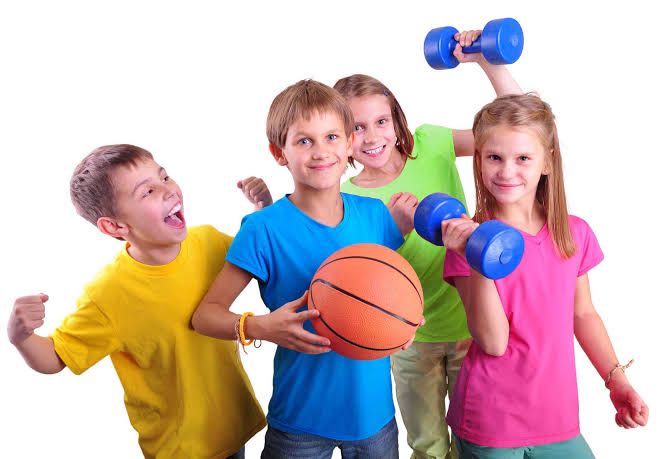
Sports are considered a vital part of children’s lives, playing an essential role in their physical and mental growth and development. Sports serve as an excellent means to promote public health and achieve psychological and social balance. Below are the most prominent benefits children gain from practicing sports:
1. Enhancing Physical Health:
Practicing sports helps strengthen muscles and bones, and improves body flexibility and balance. Sports activities contribute to maintaining a healthy weight and reducing the risk of chronic diseases such as obesity, diabetes, and heart disease. Sports increase the body’s endurance and improve blood circulation and respiratory functions.
2. Developing Social Skills:
Sports encourage children to interact and cooperate with their peers, which enhances communication and teamwork skills. Through sports activities, children acquire ethical values such as respect, discipline, and hard work. These values contribute to building their personalities and qualify them to face life’s challenges better.
3. Stimulating Mental Growth:
Studies have shown that children who practice sports regularly enjoy better cognitive abilities. Sports enhance brain development, improve memory, and increase focus and attention. Additionally, sports contribute to improving mood and reducing stress and anxiety levels.
4. Boosting Self-Confidence:
Sports give children the opportunity to achieve success and a sense of accomplishment. Winning matches and achieving personal goals help children build their self-confidence and self-esteem. This sense of achievement enhances their ability to face challenges and succeed in other areas of their lives.
5. Learning Discipline and Responsibility:
Sports teach children the importance of commitment and discipline, whether through regular attendance at training sessions or following coaches’ instructions. Children learn how to deal with failure and loss, and how to persevere to achieve success. These lessons are extremely useful in their future lives.
6. Encouraging an Active Lifestyle:
Practicing sports at an early age encourages children to adopt an active and healthy lifestyle. Children learn the importance of physical activity and how to integrate it into their daily lives. These healthy habits acquired in childhood stay with them throughout the different stages of their lives, contributing to improving their overall quality of life.
What hurts the feelings of people with disabilities
One of the things that hurts the feelings of people with disabilities and special needs the most is adopting a look of pity.
Some phrases we say unconsciously such as: (Poor thing, poor guy, may God help him, may God be with his family, how will he be able to continue the rest of his life, death is his only way, may God choose what is best, God willing God will compensate his family). These phrases are not felt by the disabled person subjectively, but he may encounter them daily in his private and public life, whether through family visits or while leaving the house, and these affect his psyche and create for him a state of weakness and negative helplessness, and in most cases, they may lead him to boycott people or leave them for fear of hearing their sayings or words.
It is important to pay attention to our words and actions so as not to hurt any person from the category of people with special needs.
Types of Disabilities
In our daily lives, we may encounter someone suffering from a certain disability.
In order to be aware and careful in dealing with them, it is necessary to understand the types of disabilities because we might not be aware that a certain condition is considered a type of disability.
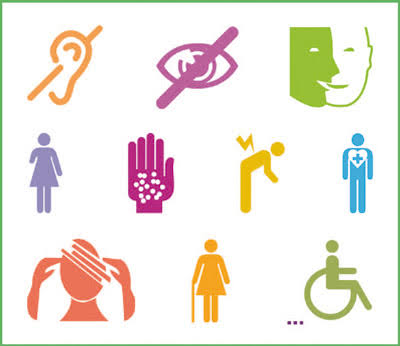
Disabilities include visual impairment, hearing impairment, mental disability, physical and motor disability, learning difficulties, speech and language disorders, behavioral and emotional disorders, autism, double and multiple disabilities, and other disabilities that require special care.
Each disability varies in its severity from one person to another, as well as its treatability.
1. Motor Disability:
Motor disability is divided into five types:
First: Cerebral Palsy cases:
It is a deficiency in the nervous system in the brain area, resulting in paralysis that affects either all four limbs, the lower limbs only, or one side of the body, whether the right side or the left side. This paralysis results in a loss of ability to control various voluntary movements.
Second: Progressive Muscular Dystrophy:
A hereditary disease that begins by affecting the voluntary muscles in the patient’s four limbs, then shifts to affect the rest of the involuntary muscles.
Third: Cases of fission or occurrence of a cleft in the vertebrae of the spinal column:
Vital cells in the spinal cord are severely injured when parts of them protrude, and their basic functions are totally or partially disrupted.
Fourth: Various congenital deformities:
These are various congenital deformities that occur due to hereditary or non-hereditary reasons during an abnormal pregnancy, affecting the joints or bones. These deformities appear either in the form of stunted growth of the limbs or a strange curvature in the bones.
Fifth: Other cases with different diagnoses:
These are various cases as follows: (Polio, osteoporosis, endocrine gland disorders, spinal cord diseases, chronic peripheral nerve diseases, and other chronic diseases affecting the blood vessels).
2. Mental Disability:
Intellectual disability is defined as a state of arrested or incomplete mental development, characterized specifically by impairment in skills, appearing during the developmental cycle, and affecting the general level of intelligence, i.e., cognitive, linguistic, motor, and social abilities. Retardation may occur with or without another psychological or physical disorder.
Among the most famous is Down Syndrome, which is a congenital disorder resulting from the presence of an extra chromosome in the body’s cells, and the percentage increases with the mother’s age.
3. Visual Impairment:
Visual impairment ranges between total and partial blindness, and on this basis, there are two types of visual impairment:
-
The blind, whose visual condition requires the use of the Braille method.
-
The visually impaired, who can see through visual aids.
4. Hearing Impairment:
Hearing impairment is a general term covering a wide range of degrees of hearing loss, ranging from deafness, severe loss, and mild loss. Its signs may be visible or hidden, which leads to problems in the child’s life without knowing the cause, such as academic failure. The child may be described as stupid for not interacting with others. It is usually accompanied by many disabilities, such as: (Down syndrome, cerebral palsy, intellectual disability, autism, ADHD, cleft palate, and cleft lip).
Do You Like the Theme?
Share with Your Friends!
When it's about controlling hundreds of articles, product pages for web shops, or user profiles in social networks, all of them potentially with different sizes.
Will be used in accordance with our Privacy Policy